
YBVR
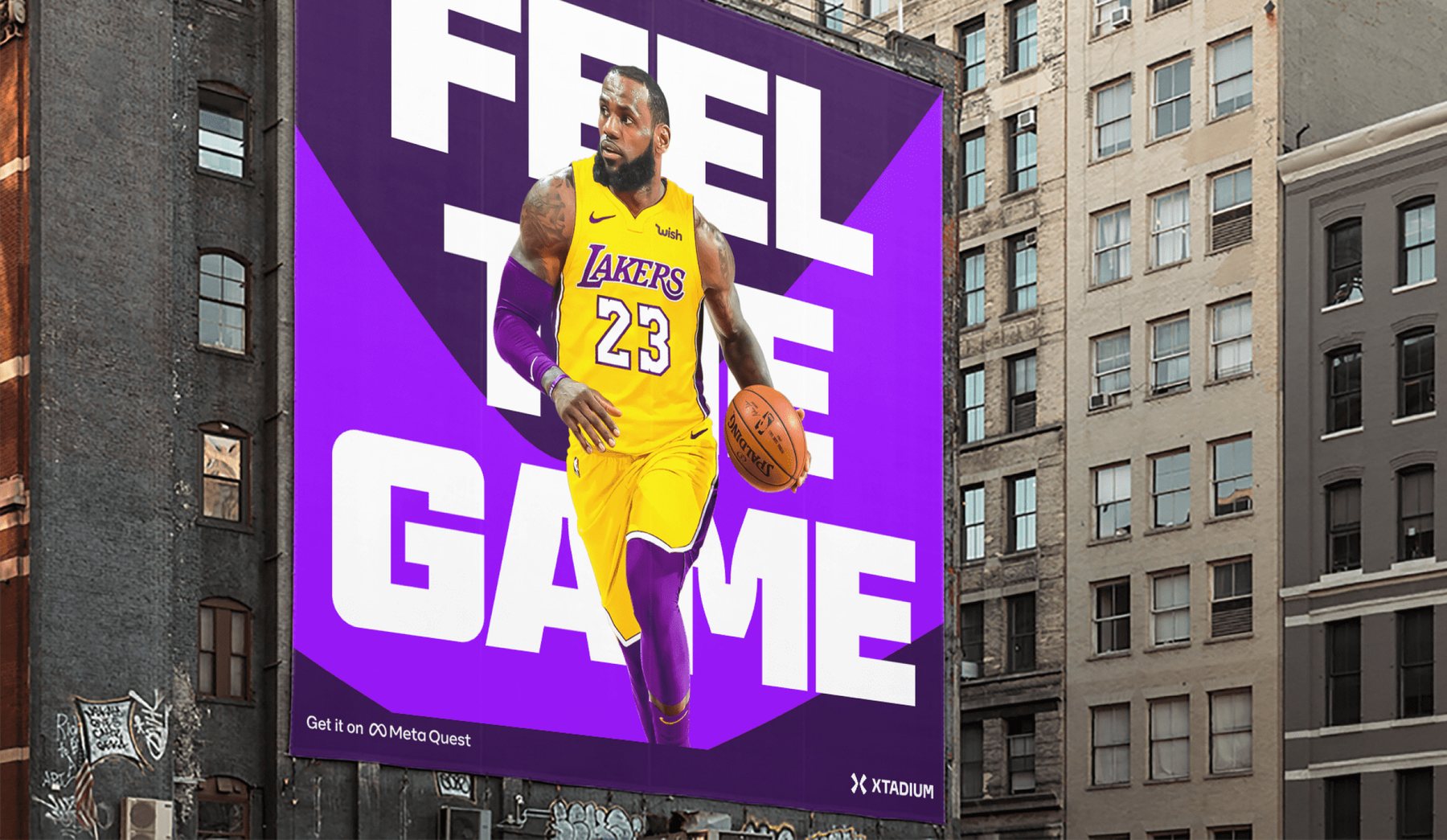
The foundation Zuckerberg put on stage.
Client
YBVR — Xtadium & Samsung Galaxy VR
Role
UX/UI Designer
Ways of working
Remote (California)
Sector
Live and on-demand sports in VR
Since
2021
Product context
Xtadium is a social VR metaverse for watching live and on-demand sports, built for multiple devices.
Main challenges
Establishing an interaction and content architecture flexible enough to scale across multiple devices and years of product evolution, while designing for hardware (the Samsung Galaxy VR) that was not publicly available yet.
Conceptualization from zero — Xtadium
Designed the entire interaction foundation and UI of Xtadium from scratch. The work became the long-term reference for the team: years later, the CMS structure and internal development nomenclature were still based on what was defined in this project.
Celia started shaping the product in 2021. In 2023, Mark Zuckerberg featured Xtadium on stage at Meta Connect.
The brand itself was created by Paseo Studio, an external agency specialised in branding. We validated and supervised that work, and it is thanks to them that the product we were building for Meta found a voice of its own.
Content architecture at its best
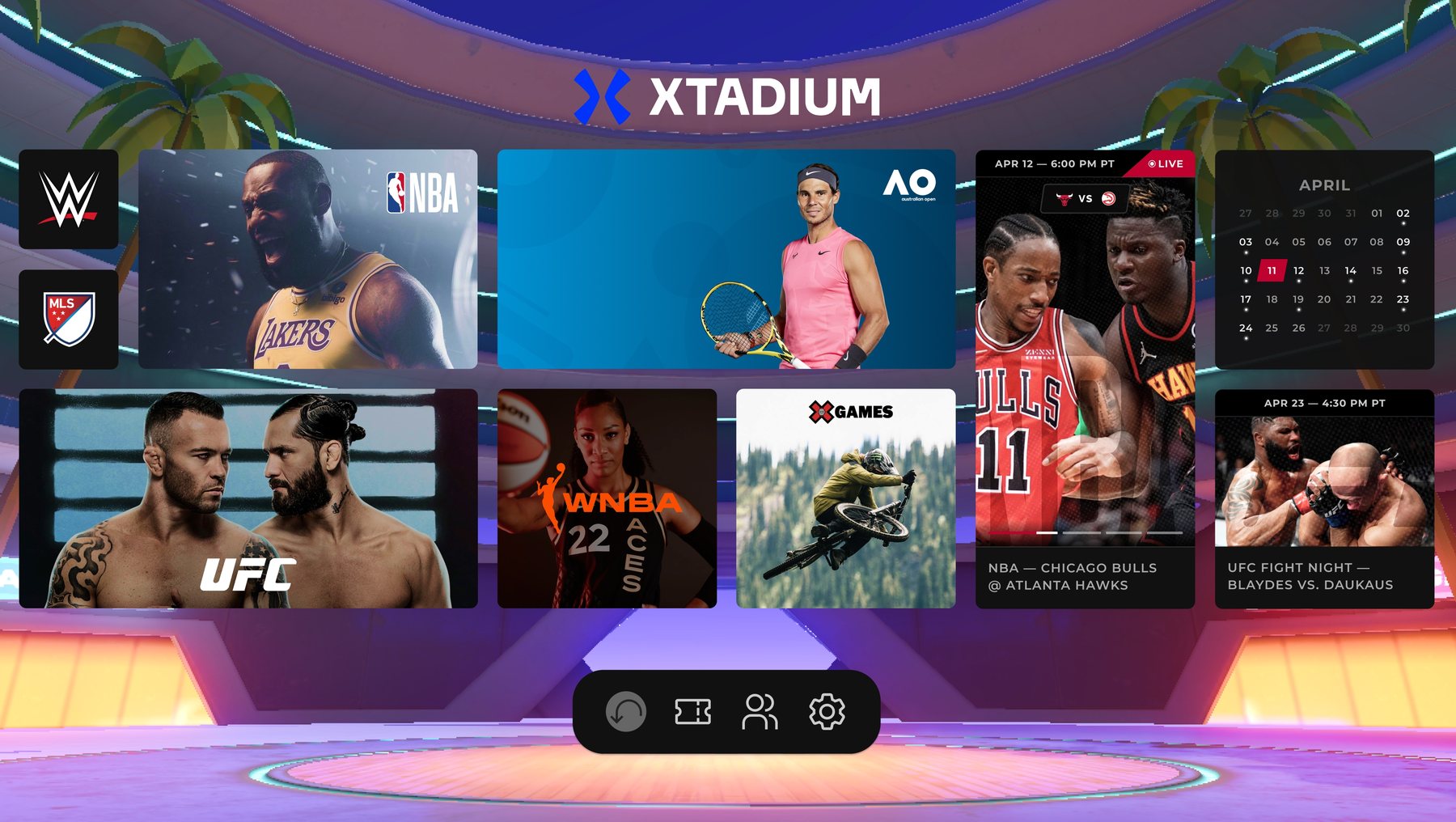
Being a multi-device experience, the interaction had to be reimagined for each platform and input method. This included defining how users would navigate and interact across different headsets, as well as how to organize the content architecture, structuring sports categories and distinguishing between live events and on-demand content in a way that felt intuitive in VR.
Virtual reality is not isolating
Designed and conceptualized the Friends functionality, allowing users to invite others to watch the same content together in real time, bringing a social layer to the sports viewing experience.
Samsung Galaxy VR — an AI-powered sports app
Years later, YBVR brought us back to lead the UX proposal for a major US client requiring a sports app on the then-unreleased Samsung Galaxy VR headset. This meant hands-on testing of pre-market hardware, adapting to its new interaction model, and working within Samsung's Material Design guidelines for VR.
We also integrated an AI layer powered by Gemini, enabling users to find sports content through natural voice or conversational input, eliminating the need to type. The system was designed to learn from each user's behavior, progressively surfacing more relevant content over time.
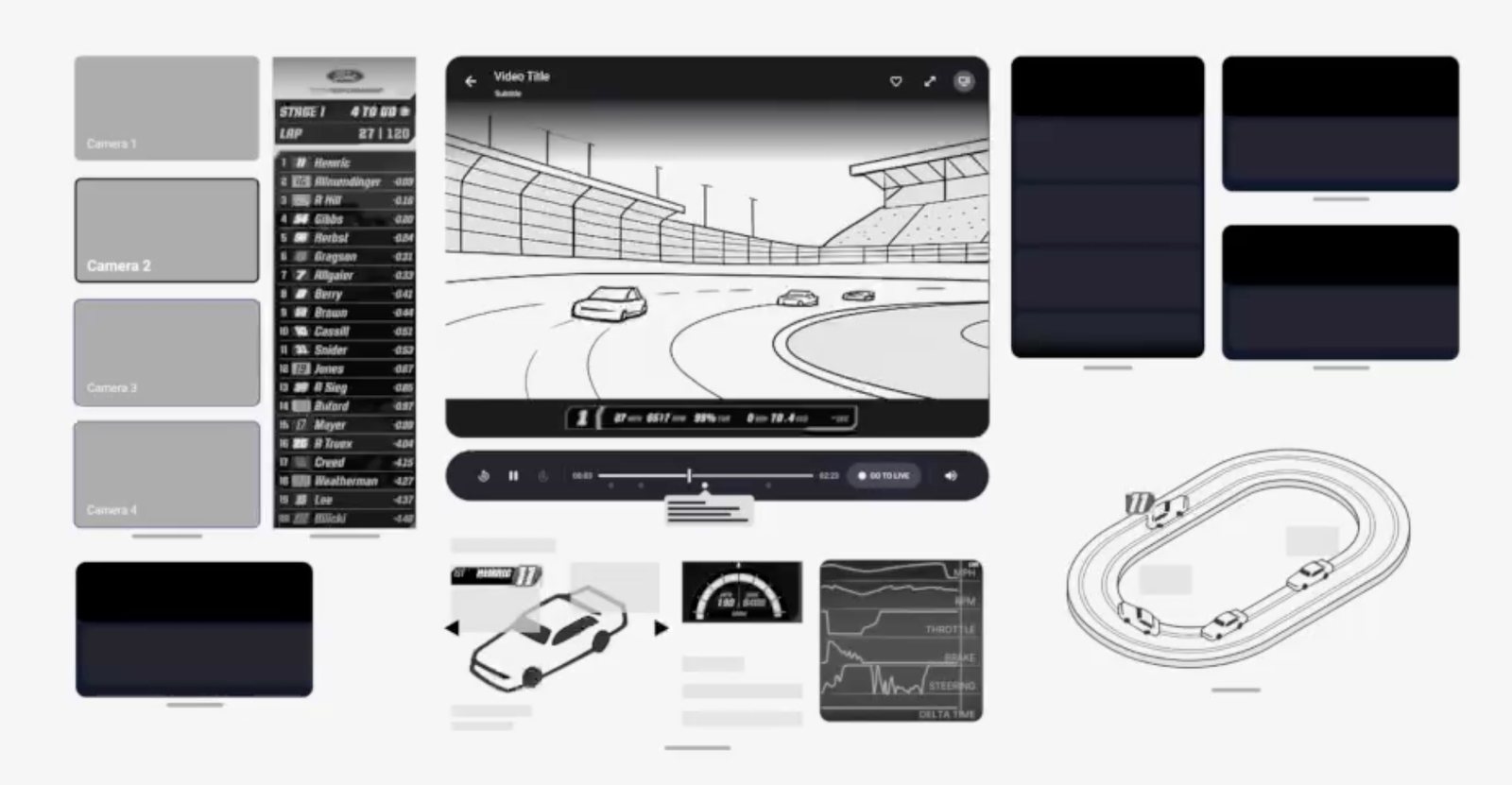
The project is under NDA, so the finished product cannot be shown here. What can be shown are the black-and-white wireframe proposals behind it.
Get in touch
with Celia
Meet Celia. She's the heart of KA Studio. Technology connoisseur. Gamer. Designer. User centered.
She builds the right team for every project.
No two get the same lineup.